
Biosafety and Waste Management Practices in Medical Laboratories
Published 10 months ago
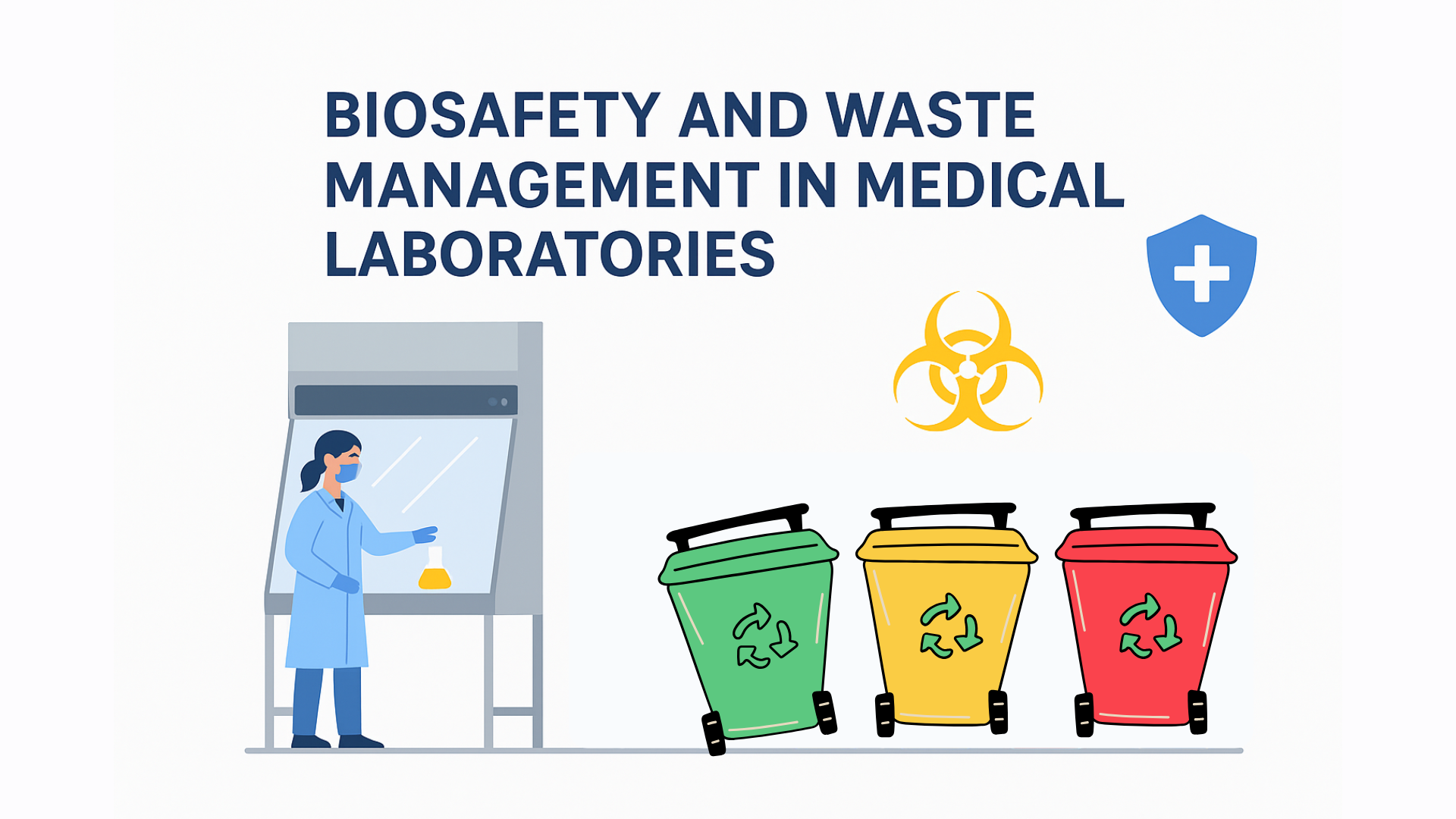
1. Why Biosafety and Waste Management Matter
Medical laboratories work with blood, body fluids, and other biological specimens that may contain infectious agents.
Without proper biosafety and waste management:
- Laboratory staff are exposed to infections.
- Contaminated waste harms the environment.
- The lab risks losing NABL accreditation due to safety non-conformities.
Hence, maintaining biosafety isn’t just a regulatory requirement - it’s a moral responsibility of every healthcare facility.
2. Understanding Biosafety in Laboratories
Biosafety refers to the safe handling, containment, and disposal of potentially infectious materials.
ISO 15189:2022 and NABL guidelines mandate that every laboratory must identify hazards, implement safety protocols, and train staff to minimize risk.
The Core Objectives of Biosafety Are:
✅
Protect laboratory personnel
✅
Protect patients and visitors
✅
Protect the environment
3. Levels of Biosafety in Laboratories
Biosafety practices are classified into four levels depending on the risk associated with the microorganisms being handled.
|
Biosafety Level |
Applicable To |
Key Requirements |
|
BSL-1 |
Non-pathogenic organisms (e.g., teaching labs) |
Basic hand hygiene, lab coat, gloves |
|
BSL-2 |
Moderate-risk agents (e.g., diagnostic labs) |
Biosafety cabinet, restricted access, waste segregation |
|
BSL-3 |
High-risk pathogens (e.g., TB labs) |
Controlled airflow, PPE, specialized training |
|
BSL-4 |
Extremely dangerous pathogens |
Full body suits, isolated facilities |
Most diagnostic laboratories in India operate under BSL-2, which requires specific biosafety and waste management practices discussed below.
4. Core Biosafety Practices in Diagnostic Laboratories
Here are the essential safety measures every laboratory must implement:
a. Laboratory Design and Infrastructure
- Maintain separate sample collection and testing areas.
- Ensure good ventilation and adequate lighting.
- Use biosafety cabinets (Class II) for processing infectious samples.
- Install handwashing sinks with elbow or foot-operated taps.
b. Personal Protective Equipment (PPE)
- Mandatory PPE includes lab coats, gloves, masks, and face shields.
- Change gloves between procedures.
- Avoid eating, drinking, or using mobile phones in the lab.
🧤 Tip: Keep PPE stock monitored under your QMS resource control checklist.
c. Sample Handling and Storage
- Treat every sample as potentially infectious.
- Label specimens clearly and avoid leakage during transport.
- Use sealed, disinfected secondary containers for sample transfer.
- Maintain separate storage for infectious materials and reagents.
d. Disinfection and Decontamination
- Use 1% sodium hypochlorite for surface disinfection.
- Decontaminate work areas daily and after any spill.
- For spills, cover with absorbent material soaked in disinfectant and leave for 30 minutes before cleaning.
🧴 Remember: Never mix different disinfectants - it reduces effectiveness.
e. Staff Training and Health Monitoring
- Conduct biosafety training every 6 months.
- Maintain vaccination records (Hepatitis B, Tetanus).
- Ensure immediate reporting of needle-stick injuries or exposures.
- Keep an incident register as part of your QMS.
5. Biomedical Waste Management: The Other Half of Safety
Even the safest lab generates biomedical waste every day -
used syringes, slides, gloves, and sample containers.
Improper disposal can cause infection spread and legal penalties under India’s Biomedical
Waste Management Rules, 2016 (amended 2018).
Let’s break down what every lab must do.
6. Waste Segregation at Source
Every piece of biomedical waste must be segregated at the point of generation using color-coded bins.
|
Color of Container |
Type of Waste |
Example |
|
Yellow |
Infectious and pathological waste |
Used gloves, contaminated dressings |
|
Red |
Recyclable contaminated waste |
Plastic tubes, catheters, vacutainers |
|
White (Translucent) |
Sharps waste |
Needles, scalpels, blades |
|
Blue |
Glassware and metallic body parts |
Slides, broken glass |
🗑 Tip: Clearly label all bins and train staff to follow segregation rules strictly.
7. Storage, Transportation, and Disposal
- Store biomedical waste for no more than 48 hours.
- Use barcoded bags for traceability.
- Handover waste only to authorized Common Bio-Medical Waste Treatment Facility (CBWTF) vendors.
- Maintain waste transport and disposal records in your QMS logbook.
8. Waste Treatment Methods
Depending on the type, waste must be treated before final disposal:
- Autoclaving: For disinfection of microbiological waste.
- Incineration: For high-risk infectious materials.
- Chemical disinfection: For surface decontamination and liquid waste.
- Shredding: For recyclable plastic waste after disinfection.
9. Documentation and Records
Maintain the following records for compliance and NABL audit readiness:
- Daily waste generation and disposal logs.
- Vendor disposal certificates.
- PPE stock and issue records.
- Incident and exposure reports.
- Training and vaccination records of staff.
📋 These records demonstrate both safety compliance and QMS implementation effectiveness.
10. Common Mistakes Labs Make (and How to Avoid Them)
|
Mistake |
Better Practice |
|
Waste segregation done at the end of day |
Segregate immediately at source |
|
Missing waste barcoding |
Implement barcode tracking system |
|
No record of PPE issuance |
Maintain a PPE log under QMS |
|
Spills handled without reporting |
Record and analyze all incidents |
|
Expired disinfectants used |
Check expiry and prepare fresh solutions daily |
Final Thoughts
Strong biosafety and waste management practices protect not only your staff but your laboratory’s reputation and accreditation.
They are an integral part of ISO 15189:2022 Clause 7.3 (Facilities and Environmental Conditions) and Clause 7.9 (Control of Non-Conformities) - making them mandatory for NABL-accredited labs.
At Qualityveda, we help diagnostic labs design and implement complete biosafety programs, staff training modules, and QMS-based waste management documentation - ensuring both compliance and safety.
Because in laboratory quality, safety is the first step toward accuracy.