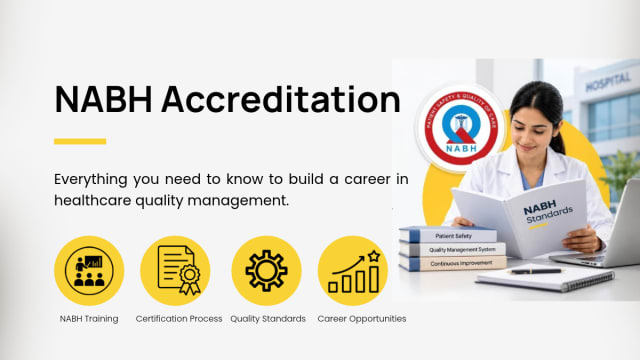
Complete NABH Certification Course Guide: Eligibility & Career
Explore the complete NABH certification course guide covering types, eligibility, curriculum, and career opportunities in healthcare quality management.
Explore the complete NABH certification course guide covering types, eligibility, curriculum, and career opportunities in healthcare quality management.

Complete guide to ISO certification, including its importance, popular standards, 2026 updates, and key differences from BIS.

NABH accreditation ensures top hospital quality and patient safety in India, guaranteeing better care and Ayushman Bharat eligibility.
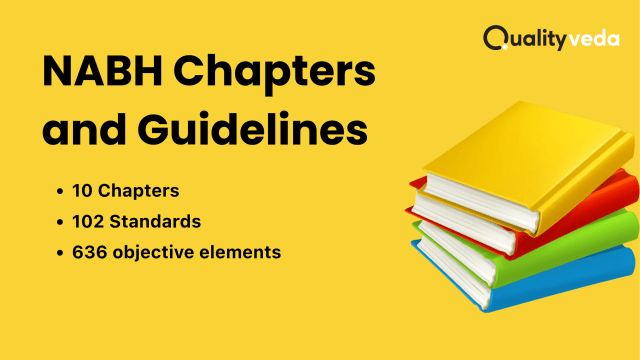
Explore the 10 core NABH chapters, patient-centered and organization-focused standards, quality indicators, and the 6th Edition guidelines for hospital accreditation.
Complete step-by-step NABL accreditation process for testing and medical labs in India, including documentation, audits, costs, and expert tips.

QCurve is one of the best free Levey-Jennings (LJ) chart software solutions for medical laboratories. Designed to simplify Internal Quality Control (IQC), it enables laboratories to create professional LJ charts, monitor QC performance, apply Westgard rules, and identify analytical errors with ease
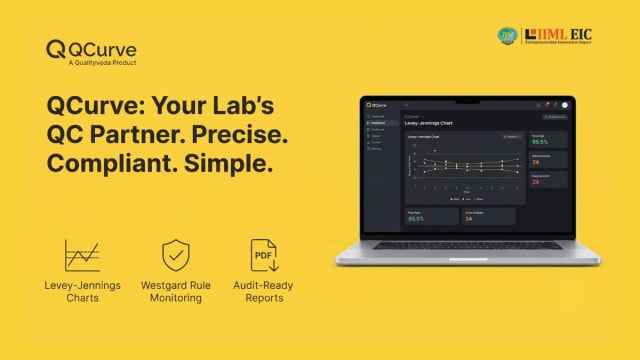
Discover how QCurve simplifies Internal Quality Control with Levey-Jennings Charts, Westgard Rules, QC analysis, and NABL-ready documentation for laboratories.
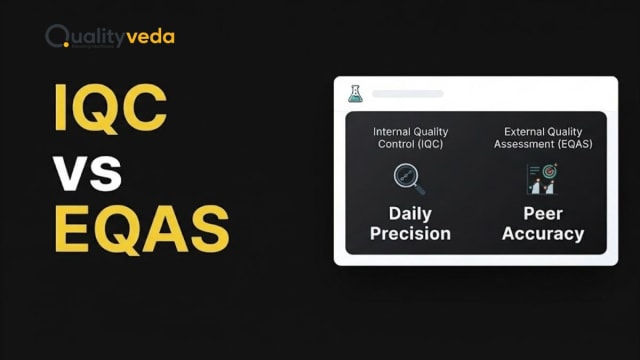
Confused about the relationship between IQC and EQAS? Learn the key differences, how Internal Quality Control (IQC) and External Quality Assessment Scheme (EQAS) work together, and why both are essential for ensuring accurate, reliable, and NABL-compliant laboratory results. This guide covers their purpose, benefits, implementation, and requirements according to ISO 15189:2022, NABL, and CLSI guidelines.
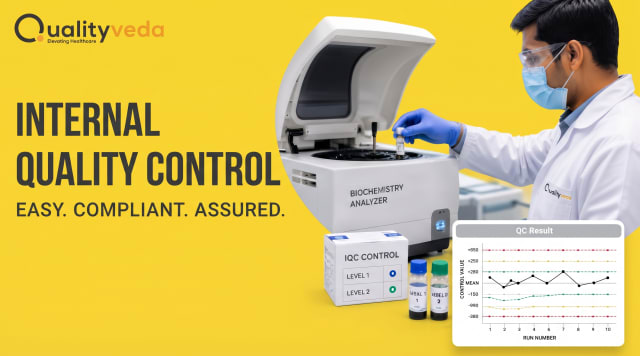
Learn how to perform Internal Quality Control (IQC) in a medical laboratory with this step-by-step guide. Understand QC materials, Levey–Jennings charts, Westgard rules, corrective actions, and documentation requirements as per ISO 15189, NABL, and CLSI guidelines.
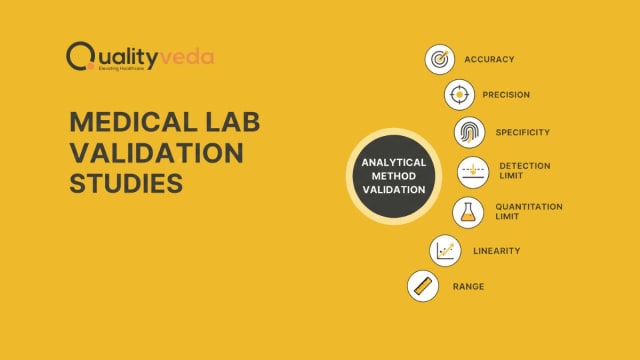
Validation studies confirm that a laboratory test method is fit for its intended use by demonstrating consistent, accurate, and reliable performance, ensuring compliance with ISO 15189:2022, CLSI, and NABL requirements.
Validation studies should be performed according to recognized international guidelines such as CLSI, ISO 15189, IFCC, CAP, and NABL. These references provide standardized procedures to ensure accurate, reliable, and compliant laboratory test results.
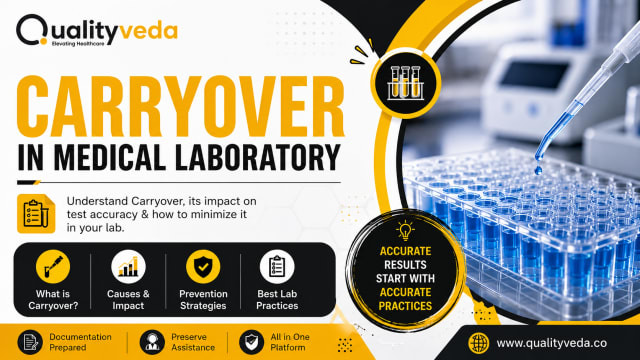
A Carryover Study is a validation process used to determine whether a high-concentration sample affects the result of the next low-concentration sample due to residual sample or reagent in the analyzer. It ensures accurate, reliable patient results and verifies that the analyzer does not cause significant sample-to-sample contamination.

A Precision Study evaluates the consistency of a laboratory test by repeatedly analyzing the same sample under defined conditions. It ensures reliable, reproducible results with minimal random variation and is an essential part of method validation under ISO 15189:2022 and CLSI guidelines.
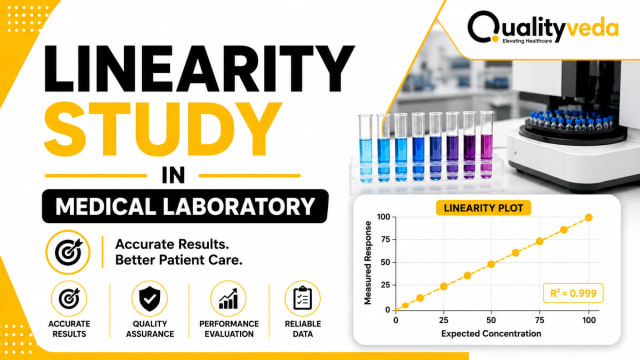
Linearity in a medical laboratory refers to the ability of a test method or analyzer to produce results that are directly proportional to the concentration of an analyte within a specified measuring range.
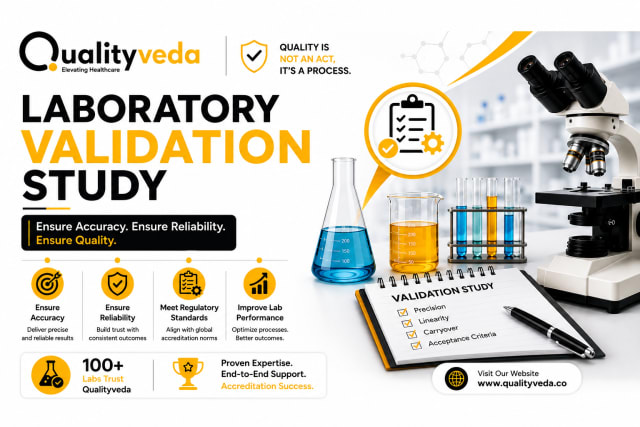
Validation studies are essential in medical laboratories to ensure that a test method consistently delivers accurate, precise, and reliable results before it is used for patient testing. Following the requirements of ISO 15189:2022 and regulatory guidelines,

With the rise in diagnostic laboratories and the growing demand for quality accreditation, there’s a huge career opportunity emerging in the field of laboratory quality management and NABL consultancy. In this blog, we’ll explore how the healthcare and diagnostics sector is creating new roles for Quality Managers, Internal Auditors, NABL Consultants, and Quality Specialists - and how you can build a successful career in this field with the right training and skills.
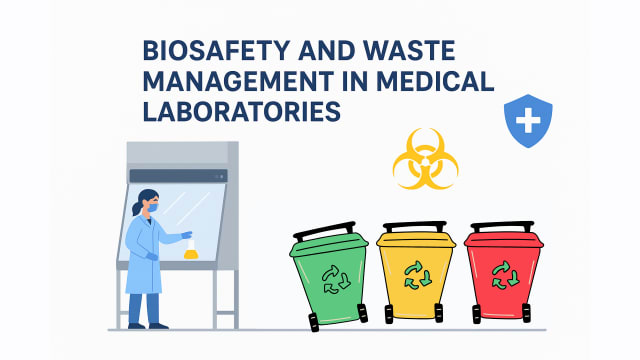
Every medical laboratory handles biological materials that can pose health and environmental risks if not managed properly. Implementing strong biosafety and waste management practices isn’t just about compliance - it’s about protecting your staff, patients, and community. In this blog, we’ll explore the key biosafety principles and biomedical waste management practices every diagnostic laboratory must follow to maintain a safe, compliant, and NABL-ready environment.
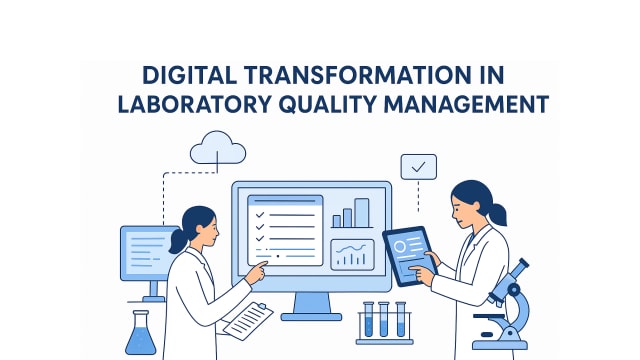
From handwritten logs and paper SOPs to cloud-based documentation and AI-driven analytics - laboratory quality management is evolving rapidly. In this blog, we’ll explore how digital transformation is revolutionizing Quality Management Systems (QMS) in diagnostic laboratories, helping them achieve higher efficiency, accuracy, and compliance with ISO 15189:2022 and NABL requirements.
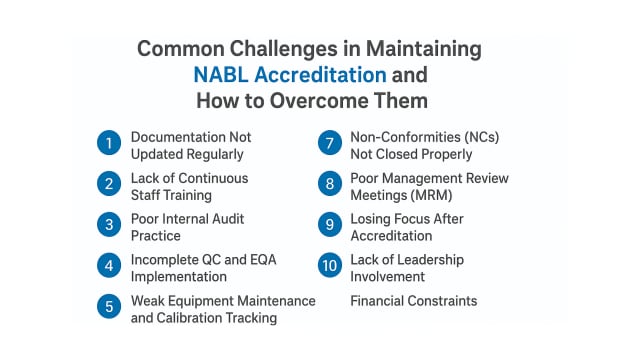
Getting NABL accreditation is a proud moment for any diagnostic laboratory - but maintaining it consistently is where the real challenge begins. Many labs lose focus after certification, leading to non-conformities during surveillance or renewal audits. This blog highlights the most common challenges laboratories face in maintaining NABL accreditation - and provides practical, step-by-step solutions to overcome them.

Behind every NABL-accredited laboratory, there’s a committed Quality Manager ensuring that every process runs smoothly, every report is reliable, and every standard is met. In this blog, we’ll explore who a Quality Manager is, what responsibilities they carry, and how their role directly impacts a lab’s journey to NABL accreditation - especially in small and mid-sized diagnostic laboratories.
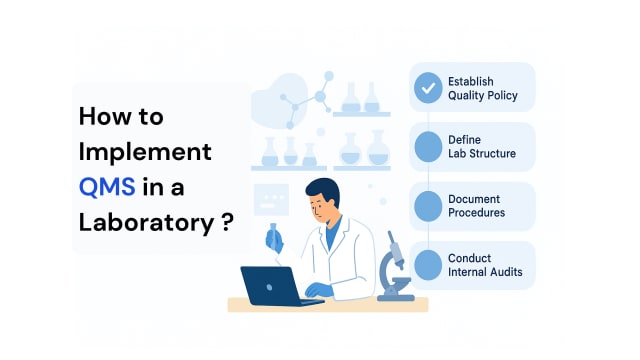
Implementing a Quality Management System (QMS) in a small or medium-sized laboratory - especially in Tier-2 or Tier-3 cities like Patna, Gaya, Jhansi, or Gorakhpur - may sound challenging. But with the right approach, even a modest lab setup can achieve world-class quality and meet NABL and ISO 15189:2022 standards. This blog will guide you step-by-step through how to build a practical, cost-effective QMS tailored for small diagnostic laboratories.
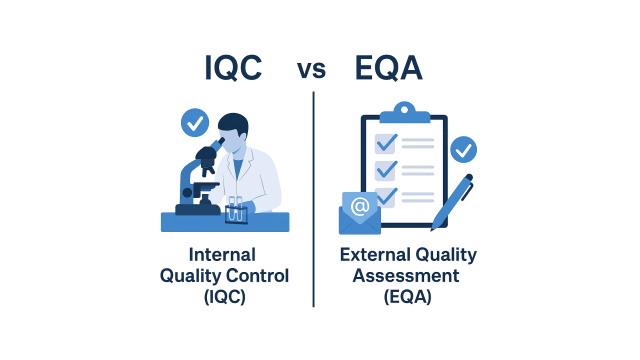
Both IQC (Internal Quality Control) and EQA (External Quality Assessment) play vital roles in ensuring the accuracy and reliability of laboratory test results. While IQC monitors daily precision inside the lab, EQA checks the overall accuracy of results compared to other labs. In this article, we’ll explain the difference between IQC and EQA, how they work, and why both are essential for maintaining NABL and ISO 15189:2022 compliance.
Even the best laboratories face challenges during NABL audits - and most of them arise from common, avoidable mistakes. Understanding these Non-Conformities (NCs) helps you prepare better and maintain compliance with ISO 15189:2022 standards. In this blog, we’ll go through the top 10 NCs identified during NABL assessments and discuss simple, practical ways to prevent them.

Preparing for NABL accreditation can feel overwhelming - but with the right process and guidance, it becomes smooth and achievable. At Qualityveda, we divide NABL preparation into simple, structured stages that help every laboratory move from initial assessment to final certification with confidence.
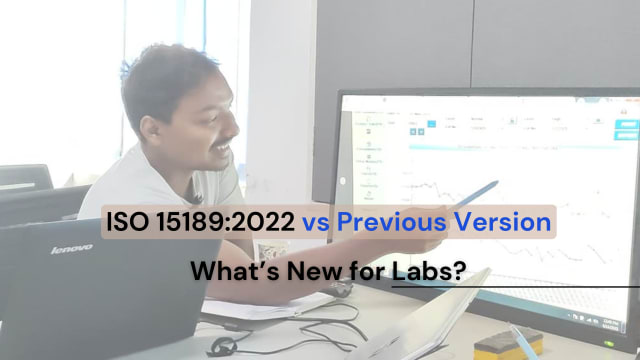
The new ISO 15189:2022 standard brings several major updates that redefine how diagnostic laboratories manage quality, structure, and competence. This blog highlights the key changes from the previous version and helps you understand how to implement the new requirements effectively in your lab.

Thinking of starting a pathology lab in India? Here's a practical, step-by-step guide to help you launch your lab — from location and licenses to setup and staffing.

Pathology is the study of diseases, but its real-world application happens inside pathology labs — where accurate diagnosis begins. Learn how pathology labs work and how Qualityveda helps improve their accuracy, efficiency, and NABL accreditation.
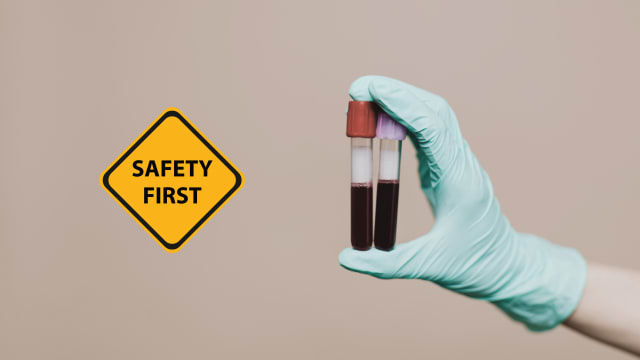
Laboratories are high-risk environments. From dangerous chemicals to infected samples, strict safety measures protect lab professionals from life-threatening hazards.

Kidney failure is often silent in its early stages. Here’s a guide to the blood, urine, and imaging tests that help detect kidney damage early — and why routine testing matters.
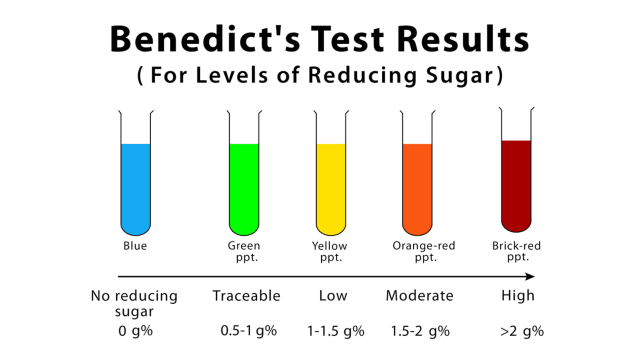
The Benedict’s test is a simple lab method to detect reducing sugars like glucose in urine. Here’s how it works and what the results mean.
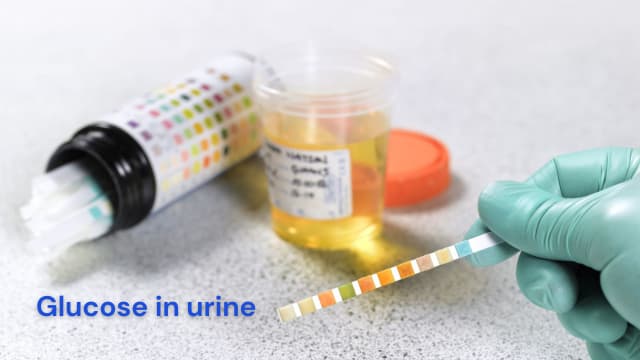
Finding sugar in your urine (glycosuria) can be a warning sign of diabetes or kidney issues. Learn the causes, symptoms, and what to do next.
New COVID variants like LP.8.1 and XFC are causing fresh infections across India. While vaccine stocks are ready, old vaccines may not fully protect against the latest strains. Here's what you need to know — in simple words.

A Lab Quality Management System ensures that all lab processes—from sample collection to report delivery—follow standardized, accurate, and reliable procedures.
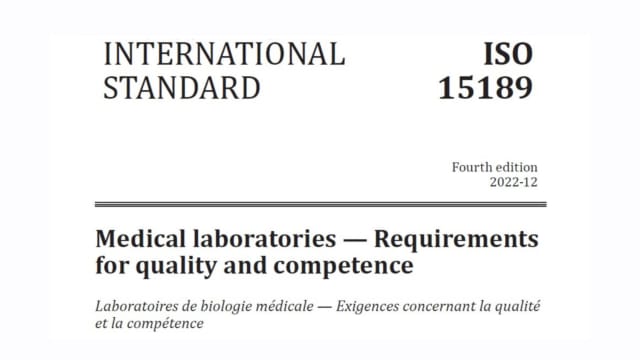
Looking for the ISO 15189:2022 PDF? Here’s how you can access it officially and understand what the latest version means for your lab.

A Quality Manager in a NABL or ISO-certified lab typically earns between ₹5 lakh to ₹12 lakh annually, depending on experience and lab size.

A Quality Manager ensures the lab consistently delivers accurate, reliable, and compliant test results. Here’s a complete job description and role breakdown.

Internal Quality Control (IQC) ensures that every lab test is accurate, reliable, and consistent before reports are released. Here’s why it’s essential — and how you can learn more with Qualityveda.

Hiring an experienced NABL consultant can save your lab time, cost, and stress during the accreditation process. Here’s why it matters — and how Qualityveda offers even more.

Using the NABL logo or symbol incorrectly can lead to suspension or legal action. Here’s a simple guide based on NABL 133 — with support from Qualityveda if you need help.
Planning to start a NABL-accredited lab? Here's a step-by-step guide to setting up your lab according to NABL and ISO 15189:2022 standards.
Applying for NABL accreditation? Here’s a step-by-step guide to filling the NABL application online, and the documents you need to prepare in advance.
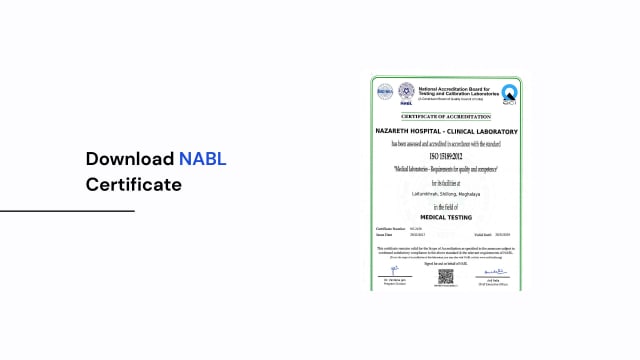
Want to check or download a lab’s NABL certificate? Here’s a simple step-by-step guide using the official NABL website.
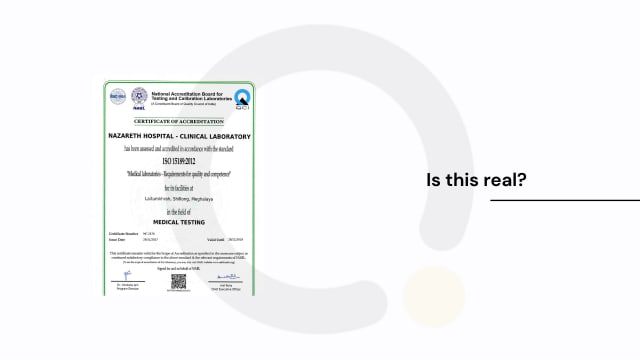
Not sure if a lab is NABL accredited? Here's how you can verify their NABL certificate and ensure their reports are genuine.

Want to become a NABL assessor or auditor? Here’s everything you need to know about eligibility, qualifications, and how Qualityveda can help.

Want to get NABL certified? Here's a step-by-step guide to help your lab meet the ISO 15189:2022 standards and get accredited successfully.

NABL accreditation ensures that diagnostic labs meet international standards for accuracy, reliability, and quality in testing.

Qualityveda’s Quality Specialist Program helps labs maintain NABL-level quality without hiring a full-time quality manager or external consultant—saving time, effort, and up to 50% cost.

NABL Accreditation is not just a certificate—it's proof that a lab delivers accurate and trustworthy test reports, making it a must-have for quality-focused diagnostics.

NABL is required to ensure that medical and diagnostic labs provide accurate, reliable, and globally recognized test results.

NABL ensures labs deliver accurate, reliable, and internationally accepted test results—boosting trust and quality in diagnostics.

NABL certificates prove that a lab meets international quality standards and delivers reliable, accurate test results.
Need help with NABL accreditation? Here’s how you can contact NABL directly — or get expert support through Qualityveda.

NABL consultants guide labs through the entire accreditation process — from documentation to audit success — saving time, cost, and confusion.
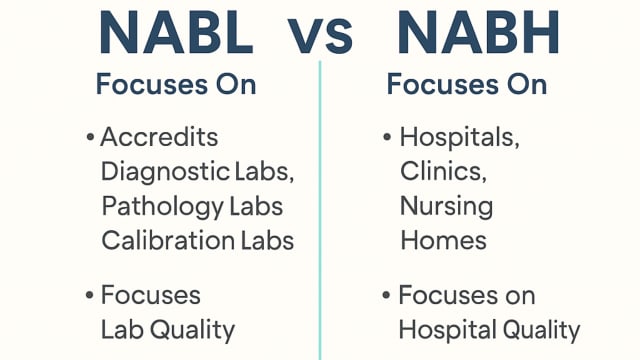
If you're in the healthcare or diagnostics field, you've probably heard the terms NABL and NABH. But what exactly do they mean — and how are they different?
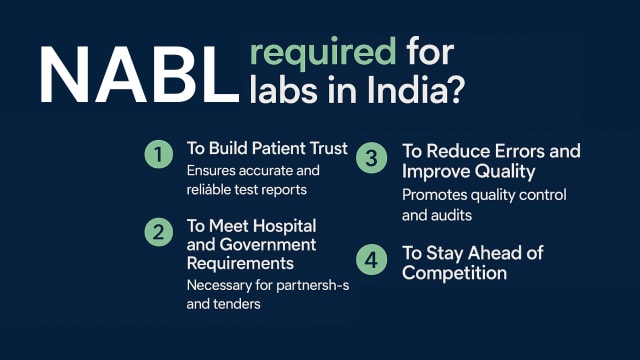
NABL is essential to ensure your lab delivers accurate, trusted, and globally recognized test results — here’s why it matters.

Learn the full form of NABL and understand its role in accrediting medical and diagnostic laboratories across India.

Looking for a reliable NABL consultant? Discover why Qualityveda is the most trusted NABL consultancy partner for labs across India.

Why Most Labs Struggle with Quality (And How We Solved It)
