
What Is Benedict’s Test and How Is It Used?
Published 1 year ago
🔬 What is Benedict’s Test?
Benedict’s test is a quick and widely used chemical test to check for the presence of reducing sugars (like glucose) in biological samples — most commonly in urine.
It's especially useful in screening for conditions like diabetes, where sugar levels in urine may be elevated.
🧪 What You Need
- Benedict’s reagent (contains copper sulfate, sodium carbonate, and sodium citrate)
- Test sample (e.g., urine)
- Test tube and test tube holder
- Heat source (boiling water bath or Bunsen burner)
📋 Step-by-Step Procedure
1. Preparation:
Pour about 5 ml of Benedict’s reagent into a clean test tube.
2. Mixing:
Add 8 drops of the sample (e.g., urine) to the test tube.
3. Heating:
Gently heat the mixture in a boiling water bath or over a flame for 5–10
minutes. Always use a test tube holder and be cautious with open flames.
4. Observation:
Watch for any color change or formation of a precipitate.
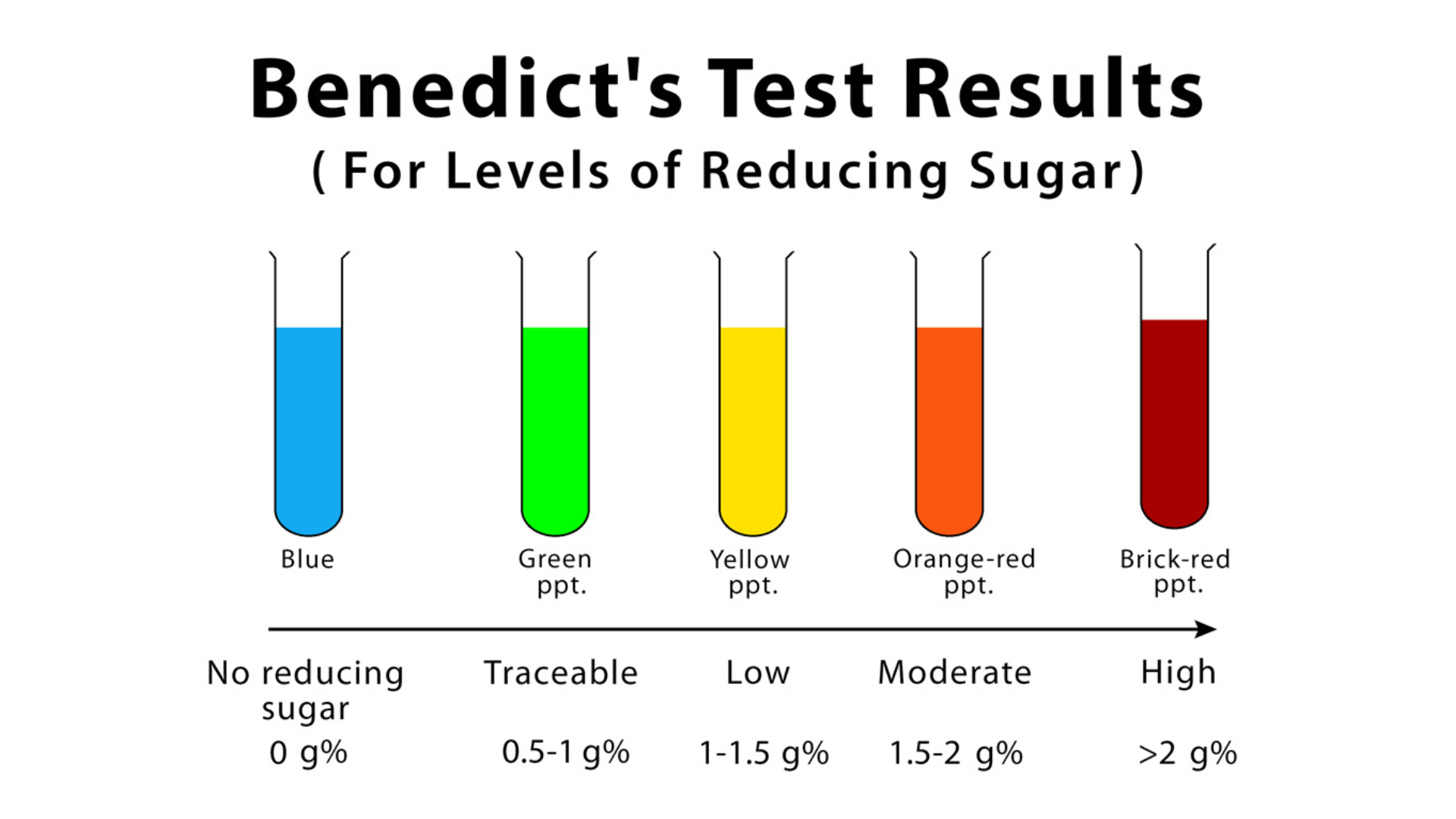
5. Interpretation of Results:
|
Color Change |
Result |
|
Blue (no change) |
No reducing sugar |
|
Green |
Trace amount present |
|
Yellow |
Moderate amount present |
|
Orange |
High amount present |
|
Brick-red precipitate |
Very high glucose concentration |
🔍 Why It Matters
A positive Benedict’s test (color change + brick-red precipitate) suggests that there is glucose or another reducing sugar in the urine. This could be a sign of diabetes, renal glucosuria, or another metabolic issue.
🩺 When Should You Get Tested?
- If you experience symptoms like frequent urination, excessive thirst, or fatigue
- As part of routine diabetes screening
- During pregnancy (to rule out gestational diabetes)
✅ Final Thoughts
The Benedict’s test is simple, fast, and cost-effective, but it’s only a preliminary screening tool. If the result is positive, it should be followed by blood glucose testing and proper medical consultation.