
Digital Transformation in Laboratory Quality Management
Published 10 months ago
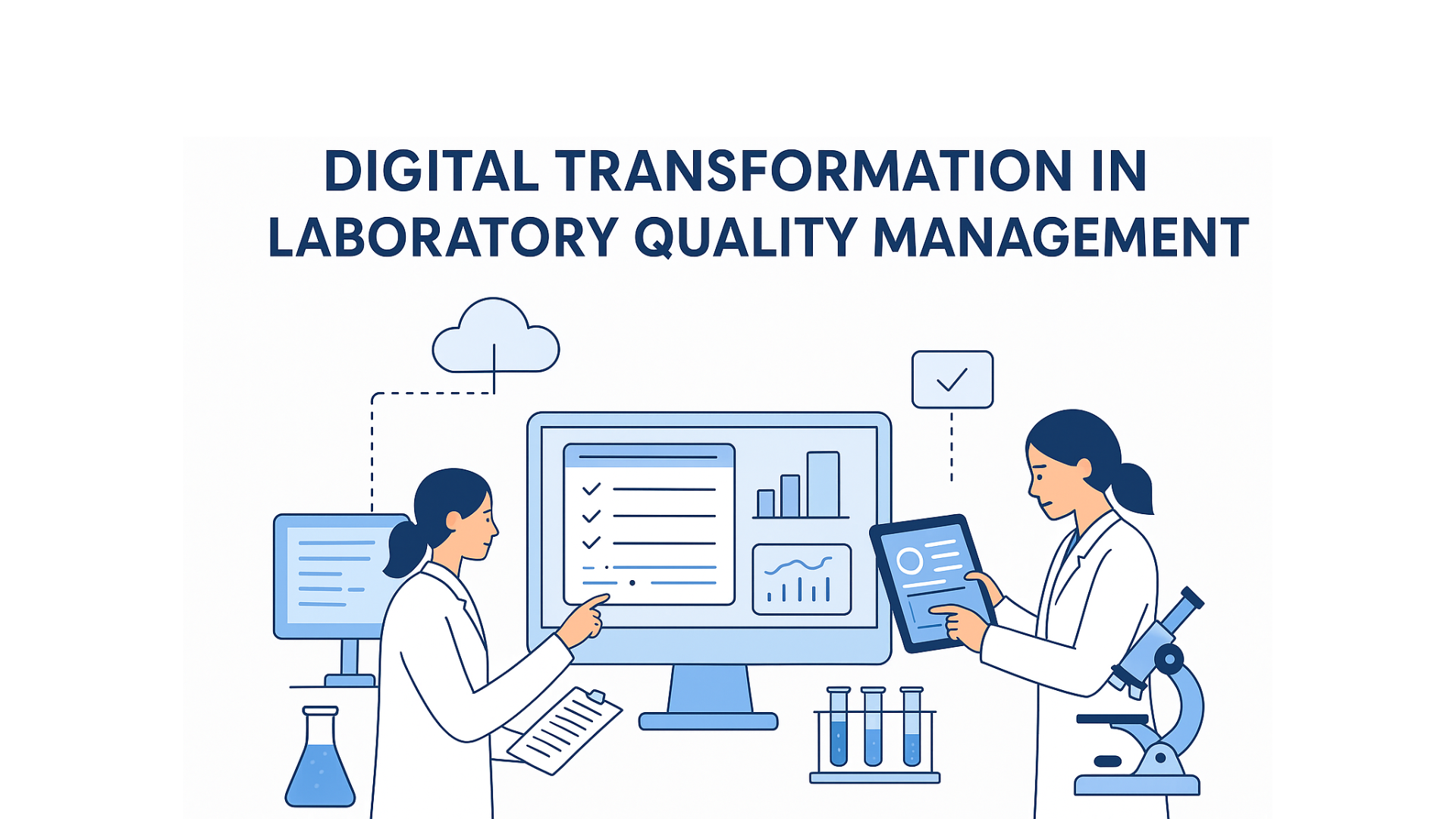
1. What Is Digital Transformation in Labs?
Digital transformation simply means using technology to improve how the laboratory operates, manages data, and ensures quality.
In quality management, this involves replacing manual processes — such as paper-based SOPs, handwritten QC logs, and manual report reviews — with digital tools and software systems that automate, track, and secure every step of the workflow.
In short, digital transformation helps labs move from reactive management to proactive quality control.
2. Why Digital Transformation Matters in Laboratory QMS
Maintaining quality manually is time-consuming and error-prone. A single missed log or misplaced document can result in major non-conformities during NABL audits.
Digital transformation solves these problems by providing:
✅
Centralized document control
✅
Real-time data monitoring
✅
Automated alerts and audit trails
✅
Easier staff training and competency tracking
✅
Quick report generation for audits
It ensures that your lab operates with consistency, traceability, and efficiency — the three pillars of NABL compliance.
3. Key Areas Where Digital Transformation Impacts Quality Management
Let’s break down where technology is making the biggest difference in laboratory QMS.
a. Document Control and Version Management
Traditionally, labs maintain multiple paper copies of SOPs — one in each section — making it hard to update and track changes.
Now, digital document control systems allow labs to:
- Maintain a single master copy with version tracking.
- Provide controlled access (read/edit rights).
- Automatically archive old versions.
- Generate change logs for auditors.
Example: Cloud-based tools like Google Drive (with access control) or specialized QMS software can manage all your documentation digitally and securely.
b. Quality Control (IQC & EQA) Management
Running daily IQC and tracking EQA reports manually often leads to missing records or calculation errors.
Digital solutions can:
- Record QC data automatically from analyzers.
- Plot Levey-Jennings charts instantly.
- Generate alerts when QC values go out of range.
- Store EQA reports and compare peer results automatically.
📊 Benefit: Immediate identification of analytical issues and faster corrective actions.
c. Equipment Calibration and Maintenance Tracking
Manual maintenance logs often lead to missed calibration dates or incomplete service records.
Digital tools now enable:
- Equipment dashboards showing calibration status.
- Automated alerts for due maintenance.
- Storage of calibration certificates.
- QR code tagging for quick access to equipment history.
⚙️ Result: No missed calibrations and complete traceability during audits.
d. Risk Management and Incident Reporting
ISO 15189:2022 emphasizes risk-based thinking.
Using digital systems, labs can:
- Record incidents in real-time (e.g., QC failure, sample mix-up).
- Assign risk scores automatically.
- Monitor corrective actions.
- Generate trend analysis reports.
📘 Outcome: Early detection of recurring issues and continuous improvement.
e. Staff Training and Competency Assessment
Tracking staff training manually (with signatures and printed sheets) is tedious.
With digital transformation, labs can:
- Schedule and track training sessions online.
- Maintain e-learning modules and attendance records.
- Evaluate competency with online tests.
- Generate automatic training status reports for auditors.
🎓 Bonus: Easier onboarding of new staff and evidence-based competency records.
f. Internal Audits and Management Review Meetings (MRM)
Digital tools help labs conduct internal audits more efficiently:
- Audit checklists can be filled online.
- NCs are tracked with auto-reminders for closure.
- MRM MOMs are stored and versioned digitally.
This ensures complete transparency and accountability — making the NABL assessment process much smoother.
4. Benefits of Going Digital in Lab QMS
Here’s how digital transformation adds measurable value to a laboratory:
|
Benefit |
Impact on QMS |
|
Efficiency |
Saves time by automating repetitive tasks like documentation, QC plotting, and reporting. |
|
Traceability |
Every change and record is time-stamped and easy to retrieve during audits. |
|
Accuracy |
Reduces human errors in data entry and calculation. |
|
Compliance |
Aligns seamlessly with ISO 15189:2022 documentation and monitoring requirements. |
|
Data Security |
Cloud storage with restricted access ensures data integrity. |
|
Decision-Making |
Real-time dashboards and trend analytics improve management decisions. |
5. Overcoming Common Barriers to Digital Transformation
Despite clear advantages, some labs hesitate to adopt digital systems due to:
- Cost concerns
- Lack of technical knowledge
- Fear of change among staff
How to Overcome These:
✅
Start small — begin with digital QC tracking
or document control.
✅
Train staff to use the tools confidently.
✅
Partner with experts who understand both NABL requirements and lab
operations.
💡 Tip: Qualityveda helps labs transition smoothly to digital QMS — guiding from tool selection to implementation and audit readiness.
6. The Future of Quality Management: Data-Driven and Automated
The next phase of digital transformation in labs is AI-assisted Quality Management — where systems can:
- Predict QC failures before they occur.
- Auto-schedule calibrations and audits.
- Suggest process improvements from performance data.
In the coming years, NABL-accredited labs will increasingly rely on data intelligence to maintain continuous compliance and quality excellence.
Final Thoughts
Digital transformation is no longer optional — it’s essential for laboratories that aim for accuracy, efficiency, and NABL sustainability.
By adopting digital tools step-by-step, even small and mid-sized labs can transform their QMS into a smart, paperless, and audit-ready system.
At Qualityveda, we help laboratories embrace digital quality management through structured QMS setup, audit tools, and training — making your NABL compliance smoother than ever.
Because in modern diagnostics, digital is the new definition of quality.